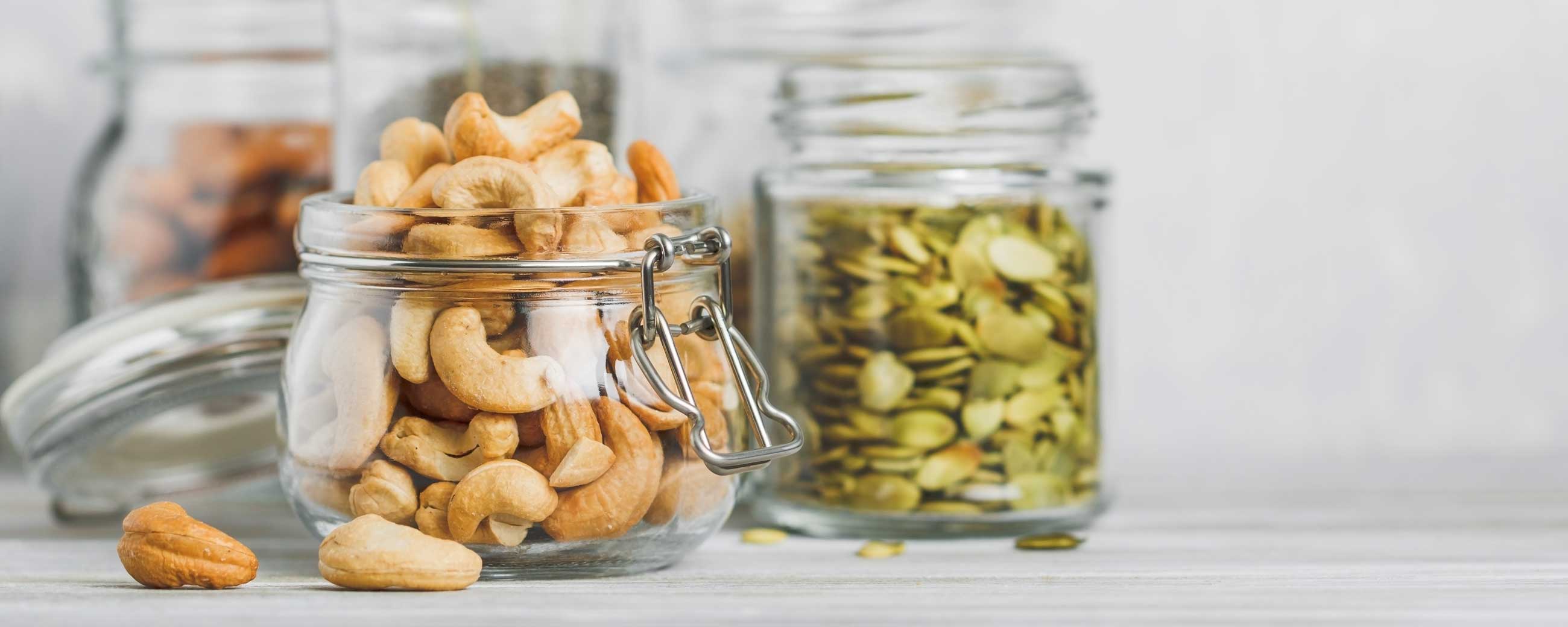
Best Nuts and Seeds for Diabetes



Nuts and seeds can be a good fit for people with diabetes because they contain many health benefits, like healthy fats, fiber and plant-based protein. Virta member Jeannie found that pre-portioned packets of almonds helped her stay on track with her new healthy lifestyle, even while traveling. Read on to learn which nuts and seeds are best if you have diabetes.
Are Nuts Good for Diabetes?
Many nuts are rich in unsaturated fats, which are a healthy form of fat that can keep you full and satiated. They also provide fiber and magnesium, which are important for metabolic health. When eating nuts, pay attention to your serving size, as they contain carbohydrates (Virta recommends 1-2 ounces of nuts per day, which usually equals around 5-10 grams of total carbohydrates). Plain or dry-roasted nuts are better choices than candied or heavily seasoned varieties. Avoid nut mixes with dried fruit, as these mixes can significantly increase your carb count.
The healthiest nuts for people with diabetes are those lowest in carbs and highest in monounsaturated fats. The worst are higher in carbs and lower in monounsaturated fats, which means they’re higher in omega-6 polyunsaturated fatty acids (PUFAs).
Macadamia Nuts
Macadamia nuts are rich, filling and work well in a lower-carb diet. Macadamia nuts contain about 4 grams of total carbs and 17 grams of healthy monounsaturated fat per serving. Snack on them plain or add to salads, yogurt, smoothies or bowls.
Pecans
Pecans contain about grams of total carbs and 12 grams of monounsaturated fat per serving. Add plain pecans to salads or yogurt or snack on a small handful. Just be sure to avoid candied pecans as these are high in sugar and carbs.
Hazelnuts
Hazelnuts contain 5 grams of total carbs and 13 grams of monounsaturated fat per serving. They’re a great option to add variety to your diet. Just avoid chocolate-hazelnut spreads as these often contain added sugar.
Almonds
Almonds have a mild flavor and are widely available in whole or slivered form. They’re also portable and contain about 6 grams of total carbs and 9 grams of monounsaturated fats per serving.
Brazil Nuts
Brazil nuts contain about 3 grams of total carbs and 7 grams of monounsaturated fats per serving. They can work well in a diabetes-friendly diet, just stick to a small amount because they’re high in selenium.
Walnuts
Walnuts are a good choice if you want to incorporate more omega-3 fatty acids into your diet. Walnuts contain about 4 grams of total carbs and 2.5 grams of monounsaturated fats per serving. Add walnuts to plain yogurt or salads or snack on a small portion when you’re on the go.
Peanuts
Peanuts tend to be affordable and easy to find, though they do contain higher amounts of carbs than some other nuts, so be mindful of your portion size. Peanuts contain about 5-6 grams of total carbs and 7 grams of monounsaturated fats per serving.
Pistachios
Pistachios can be snacking-friendly because removing them from their shells can naturally slow eating. (Just make sure to get the shelled kind!) Pistachios contain about 7-8 grams of total carbs and 7 grams of monounsaturated fats per serving.
Cashews
Cashews are a reasonable choice, though they do require a bit more portion-awareness as they are higher in carbs than some other nuts. Cashews contain about 9 grams of total carbs and 7 grams of monounsaturated fats per serving.
What Seeds are Good for Diabetes?
Like nuts, seeds can fit well in a diabetes-friendly diet, providing healthy fats, protein, fiber and minerals. The best seeds for people with diabetes are those that are the lowest in carbohydrates and omega-6 polyunsaturated fatty acids (PUFAs. The recommended portion size for seeds is 2 tablespoons.
Chia Seeds
Chia seeds provide a good source of fiber and healthy omega-3 fatty acids. They contain approximately 12 grams of total carbs and 7 grams of PUFAs per 1 ounce serving. Soaking them in a liquid to create a chia pudding-like mixture can make them easier on the digestive system.
Flaxseed
Flaxseeds are another excellent option if you have diabetes, as they have about 3 grams of total per serving and are rich in omega-3s and fiber. Add to smoothies, salads or yogurt for more fiber, omega-3s and protein.
Sunflower Seeds
Convenient and often affordable, sunflower seeds contain 5 to 7 grams of total carbs per serving and 9 grams of PUFAs. Sprinkle on salads or bowls or enjoy on their own.
Pumpkin Seeds
Pumpkin seeds contain about 3 to 5 grams of total carbs and 6 grams of PUFAs. Pumpkin seeds are an excellent snack on their own and also work well in soups, bowls, salads and yogurt.
Hemp Seeds
Add hemp seeds to salads, smoothies, bowls, yogurt or nut and seed mixes. Hemp seeds have about 3 grams of total carbs per serving and 13 grams of PUFAs.
Nuts and Seeds FAQs
What nuts should people with diabetes avoid?
If you have diabetes, you usually don’t need to avoid nuts themselves, but rather nuts that are candied, honey-roasted, chocolate-covered or loaded with added sugar, or tropical oils.
What is the best nut to lower blood sugar?
There isn’t one “best” nut to eat to lower your blood sugar. All of the nuts listed above can fit well in a diabetes-friendly diet in the recommended range (1-2 ounces per day).
Which nuts are lowest in sugar?
Many plain nuts are naturally low in sugar. Avoid trail mixes with sweetened or dried fruit or yogurt coatings.
Which seeds are best for people with diabetes?
All seeds can fit well into a diabetes-friendly diet.
Do sunflower seeds raise your blood sugar?
Plain sunflower seeds are generally blood sugar-friendly when eaten in normal portions.
The Takeaway
Nuts and seeds can be a smart snack or meal add-on for many people with diabetes because they offer healthy fats, fiber and protein. Opt for plain, unsweetened options and keep an eye on your portions.
If you are diagnosed with type 2 diabetes and want to live a healthier lifestyle, Virta Health may be able to help. By making healthy lifestyle changes in a medical setting with supportive resources like 1:1 virtual coaching, you can regain control of your health and feel like yourself again. See if you’re eligible for Virta Health here.
This blog is intended for informational purposes only and is not meant to be a substitute for professional medical advice, diagnosis, or treatment. Always seek the advice of your physician or other qualified health provider with any questions you may have regarding a medical condition or any advice relating to your health. View full disclaimer
Are you living with type 2 diabetes, prediabetes, or unwanted weight?